


The Science Behind What We Do
Research into cattle dental health is an expanding and increasingly important field within livestock management. As our understanding grows, so too does the evidence showing how oral health directly impacts animal welfare, productivity, and longevity.
At Ovation Agriculture, our work is rooted in science. We continuously review and engage with peer‑reviewed research within the cattle dental sector to ensure our approach reflects the latest findings and best practices.
Studies have shown that dental issues in cattle such as uneven wear, tooth loss, or abnormalities can significantly affect grazing efficiency, feed intake, and overall condition. Poor dental health is also linked to reduced weight gain, lower milk yield, and earlier culling, making it both an animal welfare and economic concern.
By applying evidence-based techniques, we aim to:
-
Improve feed utilisation and grazing performance
-
Support better body condition and productivity
-
Enhance overall animal welfare and longevity
We believe that translating research into practical, on-farm solutions is key. That’s why we summarise and apply peer‑reviewed findings to inform our services giving you confidence that what we do is backed by science, not just experience.
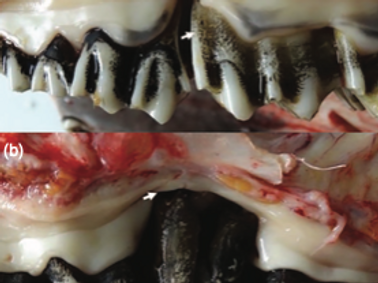
Borsanelli et al. (2016)
Research conducted in the west of Scotland demonstrates that periodontal disease in cattle is more prevalent and impactful than previously recognised. Examination of slaughtered animals revealed that dental lesions are not only relatively common but often affect multiple teeth, particularly those essential for chewing. The findings highlight that dental disease can have significant implications for both animal welfare and farm productivity, while frequently going undetected in live animals.
Key findings:
-
Around 12% of cattle examined showed clear signs of periodontal disease Affected animals commonly had multiple lesions (2–9 per animal)
-
Disease was most prevalent in the cheek teeth (premolars and molars)
-
Older cattle were more likely to be affected, suggesting cumulative damage over time
-
Periodontal disease is linked to pain, reduced feed efficiency, weight loss, and lower productivity
-
Often underdiagnosed, contributing to hidden welfare issues and potential economic losses
-
👉 Read more here: https://bvajournals.onlinelibrary.wiley.com/doi/abs/10.1136/vr.103931
Fadden et al. 2016
Dental pathology in conventionally fed and pasture managed dairy cattle
Research into dairy cattle has shown that dental abnormalities are both common and influenced by management and feeding systems. This study compared conventionally housed, total mixed ration (TMR) fed cattle with pasture‑managed cattle, identifying clear differences in the type and prevalence of dental disease. The findings highlight that diet, tooth structure, and wear patterns all play an important role in dental health, with implications for feed efficiency, productivity, and welfare.

Key findings:
-
Dental abnormalities such as transverse ridging, diastemas (gaps), and tooth overgrowths were commonly observed
-
Third molar overgrowths (M3DO) were found in 19–28% of TMR-fed cattle, but not observed in pasture-fed cattle
-
Diet plays a key role, with softer TMR diets linked to reduced natural tooth wear and increased overgrowths
-
Dental overgrowths and abnormalities can cause oral lesions, pain, and reduced chewing efficiency
-
Cattle teeth have relatively thin dentine, meaning common equine dental treatments may not be appropriate or safe
-
Dental issues may begin as early as 3.5 years of age and worsen with lactation and time
-
Overall, dental health in cattle is under-recognised despite its likely impact on production and longevity
-
👉 Read more here: https://bvajournals.onlinelibrary.wiley.com/doi/10.1136/vr.103266

Caetano et al. (2024)
Epidemiological survey on the oral health of cattle slaughtered in Goiás, Brazil
Research from Brazil provides large-scale evidence that dental disease in cattle is both common and closely linked to performance and welfare. Examining over 1,000 slaughtered animals, this study highlights how periodontal disease and tooth wear develop across different production systems and age groups. The findings reinforce that oral health issues are widespread, often silent, and influenced by factors such as age, diet, and whether cattle are managed for beef or dairy production.
Key findings:
-
Over 1,000 cattle were examined, making this one of the largest studies on bovine dental health to date
-
Gingival recession and tooth wear were the most common findings, indicating widespread oral health challenges
-
Dairy cattle showed higher rates of periodontal disease (including periodontal pockets and gum recession) than beef cattle
-
Tooth wear was extremely common, affecting over 95% of animals
-
Periodontal lesions were most frequently found in incisors and molars, key teeth for grazing and chewing
-
Age and management factors influence disease, with links between age and gum recession in beef cattle, and age-related tooth wear in dairy cattle
-
No strong link was found between sex and periodontal disease, suggesting other risk factors are more important
-
Dental disease is often difficult to detect during life, meaning problems may go unnoticed until slaughter
-
👉 Read more here: https://bvajournals.onlinelibrary.wiley.com/doi/10.1002/vetr.5220
Constant et al, 2019
Cheek teeth apical infection in cattle: Diagnosis, surgical extraction, and prognosis
Research into cheek tooth infections in cattle highlights how serious dental disease can progress when left undetected. This study focused on cattle with apical (root) infections, showing how these conditions impact feeding, milk production, and overall health. It also demonstrates that while advanced dental disease can be treated successfully, it often requires invasive surgical intervention—reinforcing the importance of early diagnosis and preventative care.

Key findings:
-
Apical tooth infections can lead to reduced appetite, weight loss, and decreased milk production
-
Common clinical signs include jaw swelling, nasal discharge, and bad breath, although some cases show no obvious external signs
-
Infections are often linked to bacterial invasion of the tooth root, frequently involving anaerobic bacteria
-
Diagnosis typically requires radiography, as many cases are not visible during routine oral examination
-
Surgical extraction was successful in all cases studied, though procedures are complex and time‑intensive
-
Postoperative complications were common (e.g. infection), but long-term outcomes were good, with cattle returning to productivity
-
Dental disease often goes undiagnosed in cattle, meaning many cases could potentially be treated earlier and more easily
👉 Read more here: https://onlinelibrary.wiley.com/doi/abs/10.1111/vsu.13197